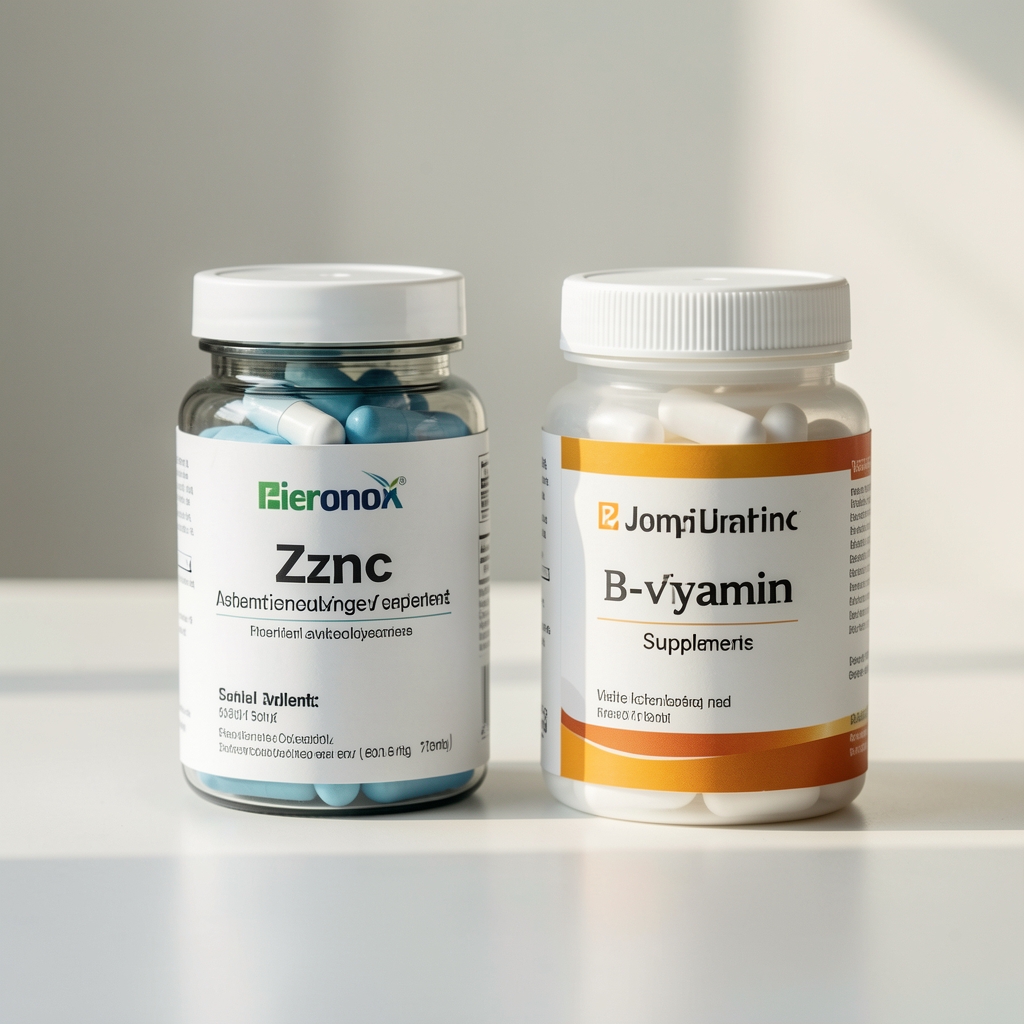
Two nutrient categories appear with particular frequency when active men document their daily supplement habits in detail: zinc and the B-vitamin complex. Neither is a new addition to nutritional discourse — both have been studied extensively and their roles in supporting daily energy awareness and metabolic functioning are well described in published nutritional literature. Yet their pairing in practice, and the reasoning that accompanies it, is worth examining editorially. This overview draws on published research to describe what is actually known about how these nutrients contribute to daily focus and energy patterns in active men.
Zinc and Its Role in Nutritional Balance for Active Men
Zinc is a mineral that functions across a wide range of biological processes — enzyme activity, protein metabolism, and cellular integrity among them. In the context of active men's supplement discussions, zinc surfaces most frequently in relation to its contribution to nutritional balance in routines that involve regular physical activity. Published nutritional research has noted that physical training can increase zinc losses through sweat, and that diets low in animal protein or high in phytic-acid-rich foods may further reduce zinc bioavailability.
This combination — elevated losses through an active lifestyle and potential dietary shortfalls — creates a nutritional gap that zinc supplementation addresses directly. The editorial pattern observed across supplement documentation is straightforward: men who train regularly, particularly those whose diets are plant-forward or calorie-restricted during cutting phases, tend to appear in published wellness literature as a group with elevated zinc depletion risk.
The form of zinc selected for supplementation follows a similar logic to other minerals in this category. Zinc picolinate and zinc bisglycinate are the forms most frequently cited in nutritional literature for their bioavailability characteristics. Zinc oxide, while widely available at low cost, is noted for lower absorption rates. For men building a supplement stack with attention to nutrient utility, form selection is a practical consideration that frequently surfaces in supplement review material.
The B-Vitamin Complex and Daily Focus Patterns
The B-vitamin family is not a single nutrient but a group of eight water-soluble vitamins — thiamine (B1), riboflavin (B2), niacin (B3), pantothenic acid (B5), pyridoxine (B6), biotin (B7), folate (B9), and cobalamin (B12) — each with distinct but interrelated roles in energy metabolism. Their collective contribution to daily focus and energy awareness is one of the most consistently documented nutritional narratives across published wellness literature, and their prevalence in men's supplement stacks reflects this editorial reality.
B12 and B6 are the two members of this group that surface most frequently in active men's supplement discussions. B12, found exclusively in animal-derived foods, is a nutrient whose sufficiency depends entirely on dietary pattern — men who have reduced their animal food intake for any reason may find their B12 status declining over time in a pattern that takes months or years to manifest and is often identified only retrospectively. For men in this category, a B12 supplement provides straightforward nutritional insurance against a gap that is both common and easily addressed.
B6 contributes to daily focus and energy awareness through its role in amino acid metabolism and neurotransmitter synthesis. The nutritional literature is consistent on its importance for protein metabolism, which makes it particularly relevant for men whose diets are protein-heavy and whose training schedules are demanding. A B-complex supplement that includes B6 alongside B12, folate, and niacin provides broad coverage across the group's documented nutritional roles, and this formulation is the one most commonly observed in active men's supplement documentation.
Zinc and B Vitamins: The Editorial Rationale for Pairing
The editorial case for discussing zinc and B vitamins together rests on a practical observation rather than a direct biochemical interaction: both nutrients are susceptible to depletion through the same lifestyle patterns — active physical training, variable dietary variety, and the urban working schedules that characterise the men most likely to be reading a publication like this one. They address different mechanisms, but the conditions that make them relevant tend to coincide.
Supplement documentation from active men frequently shows these two categories entering the stack around the same time — often as part of a structured review of the daily routine after several months of foundational supplementation with vitamin D and magnesium. The sequencing makes editorial sense: once the broad nutritional foundations are in place, attention shifts to the micronutrient gaps that a demanding training schedule and variable diet are most likely to produce.
Iron and Active Men: A Related Editorial Observation
Iron is not typically categorised with zinc and B vitamins in supplement discussions, but it surfaces in the same editorial context — as a mineral whose adequacy in the active man's daily routine deserves attention. Iron contributes to sustained energy awareness in active routines, primarily through its role in oxygen transport and energy metabolism. Endurance athletes and men who train across multiple disciplines frequently encounter discussions of iron sufficiency in their nutritional literature.
The editorial note here is one of caution rather than advocacy: iron supplementation carries a different risk profile from most other nutrients discussed in this publication, in that excess iron accumulation is documented as a concern in adult men, who do not have the regular iron loss mechanisms that women do. Unlike zinc or B vitamins, iron supplementation is editorially observed as a targeted intervention rather than a general daily addition — and it is typically addressed after assessment through a qualified wellness professional rather than added to a stack by default.
The editorial mention here is therefore contextual: iron is relevant to the energy patterns of active men, its nutritional role is well documented, and men with demanding endurance routines may find it worth discussing with a qualified nutrition professional. It is not, however, a default addition to the daily supplement stack in the way that vitamin D, magnesium, zinc, or B vitamins are.
Practical Notes on Building This Layer of the Stack
For men assembling the micronutrient layer of their supplement stack from an evidence-informed perspective, zinc and a B-complex represent a well-supported and practically uncomplicated addition. Both nutrients are water-soluble in the case of B vitamins, or handled efficiently by the body's regulatory mechanisms in the case of zinc at standard supplemental amounts. The risk profile of both, at the amounts typically observed in supplement documentation, is low relative to the nutritional benefit they address.
Timing is flexible. A B-complex is commonly taken with breakfast — the meal composition of which supports absorption and reduces the gastrointestinal sensitivity that high-dose B vitamins can occasionally produce on an empty stomach. Zinc, like magnesium, is often taken in the evening or with a substantial meal. Neither timing approach is strongly mandated by published nutritional research; consistency of daily intake is the primary practical variable.
Key Observations
- Zinc contributes to nutritional balance in active men's routines, with depletion risk elevated by regular training and variable dietary protein sources.
- B vitamins contribute to daily focus and energy awareness, with B12 and B6 most frequently discussed in men's active lifestyle supplement documentation.
- Zinc picolinate or bisglycinate are the forms most commonly observed in supplement reviews for their bioavailability.
- A B-complex covering the full group — including B12, B6, folate, and niacin — provides broad coverage across documented nutritional roles.
- Zinc and B vitamins tend to enter active men's supplement stacks as the second layer, after foundational nutrients like vitamin D and magnesium.
- Iron warrants separate consideration: it is relevant to energy patterns in endurance-active men but is not a default daily addition — context and professional assessment guide its use.
Supplement Stacking Habits: The Longer Editorial View
What the accumulated documentation of active men's supplement habits shows — from the foundational vitamin D and magnesium layer through creatine for physical output and zinc and B vitamins for daily energy balance — is a coherent and evidence-informed approach to nutritional supplementation that builds incrementally rather than all at once. The editorial pattern across the Gazette's coverage is consistent: start with documented nutritional gaps, add nutrients whose roles are well supported in published research, and observe the outcomes over weeks and months rather than days.
Supplement stacking habits, when built on this editorial foundation rather than on marketing claims or novelty, reflect the gradual discipline that distinguishes consistent habit building from the more erratic supplement cycling common in less evidence-informed contexts. Zinc and B vitamins represent this approach well — unglamorous, well-documented, and practically useful in the daily routines of active men who take their nutritional habits seriously.
We recommend speaking with a qualified wellness or nutrition professional before introducing any new habit or routine to your daily life, particularly if you have specific dietary requirements.